
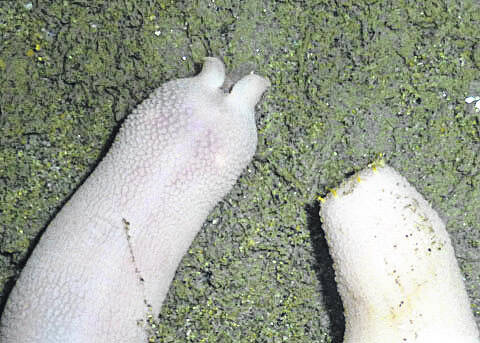
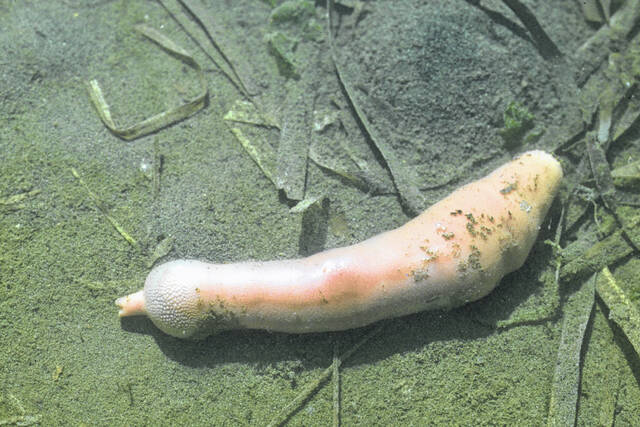
Ever heard of a “penis fish”—No?
What is it you might ask, and I’m glad you did, because an epidemic of aptly nicknamed spoon worm has been washing ashore on the beaches of California periodically for some time, always causing mystified consternation among the unsuspecting local and visitor alike.
In 2019, several residents went out for a leisurely stroll on California’s Drakes Beach only to be confronted for the first time with the pervasive stench of rotting fish flesh and the sight of what could only be termed as miles of male appendage-like objects littering the beach. Sightseers were left to wonder if the creatures were animals or simply pulsating medical waste. Yes, the “penis fish” pulsates.
In actuality, residents soon discovered, “penis fish” is a name used interchangeably with Fat Innkeeper Worm, a spoon worm whose name is derived from the creature’s ability to probe deeply into the sand, burrowing small u-shaped holes for other small below sand dwelling creatures in what some might term an “underwater brothel.”
The worms usually live underwater in the sand and only surface when aggressive storms disturb their habitat, kicking them towards shore.
Scientists claimed the innkeeper worm outbreak of 2019, which stretched for approximately two miles along the shoreline, may have been due to a recent powerful storm. With the penis fish now exposed, witnesses said seagulls arrived early, eating so many of the worms they could hardly stand, let alone fly.
The elusive penis fish has also reportedly been sighted popping up in the Pajaro Dunes, Moss Landing, Bodega Bay, and Princeton Harbor.
While it is unlikely for the innkeeper worm to make its way to the Carolina coastline without first being artificially introduced into the environment, scientists say, one should probably still be prepared for such a potential future encounter all the same so here are some interesting facts about the innkeeper worm:
Fat innkeeper worms are officially known as Urechis caupo and are considered ocean-dwelling spoon worms that measure about one foot long and are frequently found in the shallow waters along the west coast, and also off the coasts of Eastern Asia and Russia.
Predators like small fish, sharks, stingrays, seagulls, and in some cases even an otter or two have been known to enjoy munching on a fat innkeeper worm.
Innkeeper worms use a mucus-laced slime net to capture their food and a throbbing motion to swallow. When the spatula shaped nets are full, the worm swallows the food—net and all! The worms travel by moving their elongated bodies in an undulating backwards motion, constantly excreting mucus to keep its netting sticky.
Should an innkeeper worm move into the area, the outlook isn’t all bad because its diet consists of decaying seabed plant and animal matter known as detritus, plankton, and other organic particles that float suspended in water.
Fairly shy creatures, the fat innkeeper worm has surprisingly been around for some 300 million years, can live up to 25 years, and are most frequently seen in East Asian countries where they are considered a delicacy.
Yes, people have managed to get past the worm’s rotting fish smell, and in East Asia often serve the penis fish stir fried or consume it raw. According to those who partake, the worm is said to taste, not like chicken, but instead like “clam.”
In North Korea, the revered worm is called gaebul which translates roughly into the “dog’s jewels.” In China, the fat innkeeper work is known as “sea intestine” or “Chinese Penis Fish.”
So, now you know all the about the penis fish, will you recognize one if you see it? Is stir fry what’s for dinner?
Leave a Reply
You must be logged in to post a comment.