
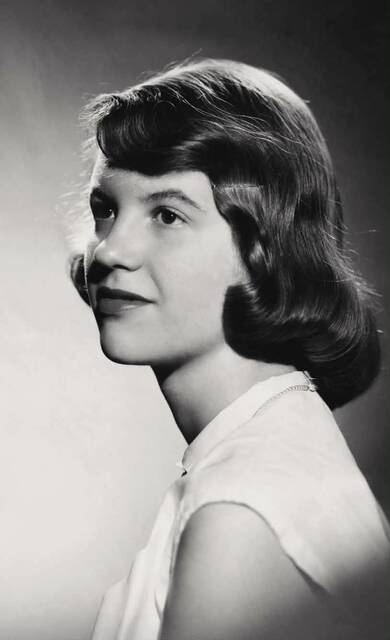
From the moment one pulls back the cover of Sylvia Plath’s “The Bell Jar” and flips to the first page’s opening lines: “It was a queer, sultry summer, the summer they electrocuted the Rosenbergs, and I didn’t know what I was doing in New York,” one immediately knows they are in the possession of a book that somehow feels different from all others.
The description in the next lines are equally captivating: “The idea of being electrocuted makes me sick, and that’s all there was to read about in the papers—goggle-eyed headlines staring up at me on every street corner and at the fusty, peanut-smelling mouth of every subway. It had nothing to do with me, but I couldn’t help wondering what it would be like, being burned alive all along your nerves.”
Plath’s only novel was originally published in London under a pseudonym, Victoria Lucas, and is a highly autobiographical account of Plath’s own descent into mental illness and her recovery, as told through the book’s main character Esther Greenwood.
Plath’s Early Life
Sylvia Plath was born October 27, 1932, in Boston, Mass., and she is most famous for her body of work as a poet and for her unique “confessional style” of writing.
She was born to Otto and Aurelia Schober Plath, both academics. A German-born professor at Boston University, Otto Plath was frequently investigated by authorities for his alleged German sympathies. Aurelia Plath was a student at the university when she met Otto — her instructor.
The marriage was unhappy, and when Otto died from diabetes, Aurelia was left to raise Plath and her younger sibling alone. To make ends meet the young mother worked as an instructor herself, before finally scoring a position as associate professor in the medical secretarial program at Boston University. The single mother would become one of her daughter’s staunchest supporters.
Becoming Sylvia
After publishing her first poem at the tender age of eight, Plath continued to enter and win writing competitions until, while in high school, she sold her first poem to The Christian Science Monitor. After having her first short story published in Seventeen magazine, Plath went on to win a scholarship in 1951, financing her education at Smith College, and a cowinner of a fiction contest put on by Mademoiselle magazine in 1952.
While in college, Plath excelled academically and creatively, however, it was also a period of depression for the young woman, leading her to attempt suicide. The attempt caused her to briefly require psychiatric hospitalization. While hospitalized, Plath received controversial electroshock therapy.
Despite the setback, Plath’s undeniable brilliance resurfaced and she graduated with highest honors from Smith University in 1955.
After graduating from Smith, Plath continued her education on a Fulbright fellowship at Newnham College in Cambridge, England in 1955. A short year later Plath met and married poet Ted Hughes in 1956. His affairs are now legendary, and Hughes and Plath divorced in 1962 owing to his still dating and alleged physical abuse. The couple had two children before they split: Frieda and Nicholas.
Plath’s first collection of poems was published in 1960 to good reviews under the name The Colossus. A poet at her heart, Plath’s “confessional style” of writing immediately resonated with the public, however, when her novel was published in January 1963 it did not initially catch the literary world by storm.
During the last three years of her life, Plath poured herself into her work. Surviving more than most, Plath finally kicked off the training wheels and began writing some of the most deeply personal, intently thought -provoking confessions the reading public had ever been privy to. Writing with the speed of someone who feels their time is short, poems of truth, longing and unabashed realism poured from Plath’s feverish pen.
We know Plath was aware of the magic her talent was manifesting because she wrote in a letter to her mother in the fall of 1962: “I am a genius of a writer; I have it in me. I am writing the best poems of my life; they will make my name.”
Plath was not wrong as the legacy left behind by her poems and The Bell Jar remain unmatched.
Aftermath
Forever haunted by life, Slyvia Plath wrote her heart out before taking her own life one cold February night in 1963.
Despite her wealth of talent, Plath’s mental monsters just could not be controlled, and faced with an onslaught of professional letters of rejection, physical sickness, the never-ending role of single motherhood coupled with her husband’s relationship failings, the real person behind the words that had brought solace and wonder to so many gave up the ghost that had haunted her for so long on February 11, 1963.
Plath never saw The Bell Jar published under her own name in the United States—which it was in 1971. Her posthumous collection pf poetry, Ariel, was published with much acclaim in 1965. She was also posthumously awarded the Pulitzer Prize in 1982.
Today, Plath is remembered for her talent and creativity, but also for the link between art and mental illness.
Would Plath’s work still reverberate with the searing realism and emotional clarity it does today without her suicide attempts, heartbreaks, or mental highs and lows?