
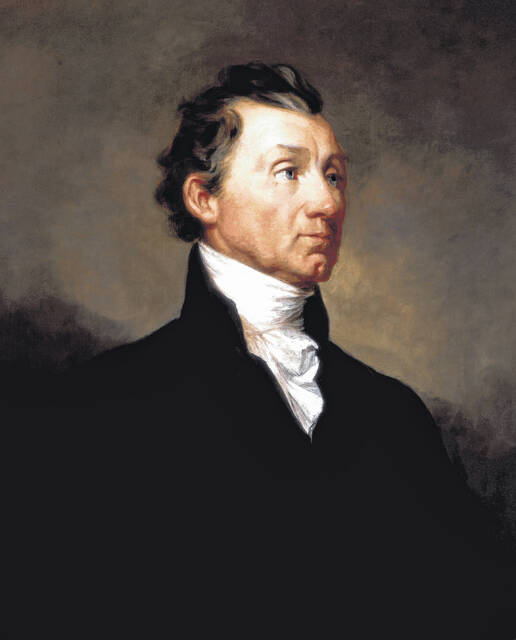
As a president, James Monroe is often forgotten in the mix of battlefield heroes like George Washington, or great philosophical minds the likes of Thomas Jefferson or Benjamin Franklin. Our fifth president, Monroe inherited a nation like today, in that it was bitterly fractured and divided. Elected following the end of the War of 1812, the nation’s leaders were at each other’s throats on the best way forward, the economy was in ruins, and Washington D.C. lay in ashes as a result of yet another unwelcome British invasion. Left to pick up the pieces, Monroe reflected on a long-ago day from a battlefield in his youth to decide how best to heal the nation.
An idealistic youth who was sympathetic to the American cause, Monroe decided to drop out of college, he attended William and Mary, to join the Continental Army under the command of George Washington.
Though he was just 18, Monroe served with Washington himself, even crossing the icy Delaware River with him during the Battle of Trenton.
On December 26, 1776, Monroe led a charge straight into enemy fire and was shot in the chest. The bullet ripped through his shoulder and severed an artery. Monroe’s life’s blood was bleeding out around him when Dr. John Reicher came running up.
Seeing the young man was unlikely to make it, the good doctor shoved his thumb straight into the wound, clamping the artery, and staunching the blood flow. Still trapped on the battlefield, bullets whizzed by the heads of both men. Thanks to the heroic act of Dr. Reicher, Monroe survived, though he carried the scar until his dying day.
At 18, Monroe took a bullet in the chest for the dream of a nation and survived. As president, he did what no other United States president had done until that point — he left Washington.
No, Monroe didn’t run to the golf course. He embarked on a months’ long cross-country journey to restore something very precious the young nation had lost — its unity.
Traveling by horseback or carriage, Monroe did not roll into town kissing babies and giving grand speeches. That was not his style.
Monroe instead established an on the ground, quiet presence of leadership.
Humanizing the office, he traveled thousands of miles throughout New England, the Southland, and the Frontier, taking the time to meet his countrymen where they were and just listen.
Responding, American farmers, factory workers, and every day citizens lined the streets to greet their president. American veterans made the effort to shake Monroe’s hand personally. At a time when throwing in the towel might have been easier, Monroe rebuilt the country one smile, one handshake at a time. Newspapers dubbed his gesture the “Era of good feelings,” but Monroe’s most well-known contribution to the nation came in 1823 with the announcement of the Monroe Doctrine.
Ever a thorn, the Europeans were again sticking their noses in American affairs, Spain was crying for its territories back and Russia was attempting to gobble its way down the Pacific Coast, when the Monroe Doctrine was introduced.
Delivered during Monroe’s seventh annual message to congress on December 2, 1883, the doctrine essentially warned European powers not to interfere in Western Hemisphere matters. Having already fought for the nation’s freedom, Monroe had no intention of relinquishing it to further colonization attempts by foreign forces nor of allowing the establishment of any puppet governments into the neighborhood.
Ill and broke when he left office in 1825, Monroe was forced to sell his beloved home and move in with his daughter.
Living off the kindness of his family in New York, the man who sacrificed so much to ensure the birth and continued resilience of America, spent his latter years formally requesting reimbursement from Congress for decades of unpaid expenses.
On July 4, 1831, Monroe became one of only three presidents to pass away on Independence Day. He passed away in his daughter’s home from heart failure and tuberculosis, penniless, and largely forgotten by a nation he devoted his entire life to.
Originally buried in New York at the Gouverneur’s family vault in the New York City Marble Cemetery, Monroe’s body was later moved to Presidents Circle at the Hollywood Cemetery in Richmond, Virginia. His tomb is now a US National Historic Landmark.
Monroe may not have won any major victories on the battlefield or penned speeches modern school children are required to learn by rote, but what he did was embody American survivalism during a time when his country needed to be reminded of not only its own worth, but also its populace’s ability to forge a future ahead together. President James Monroe gave his fellow countrymen the greatest gift he could — belief.