
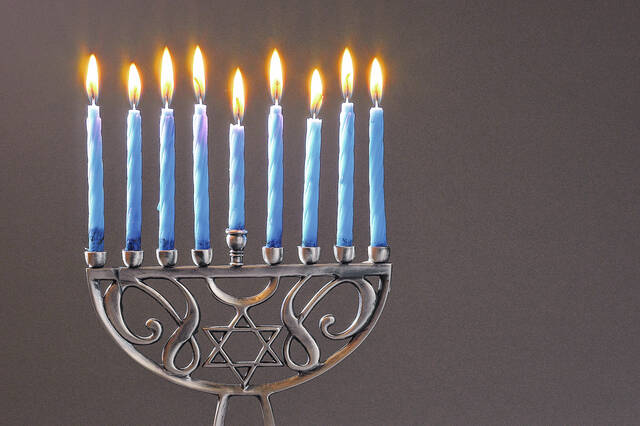
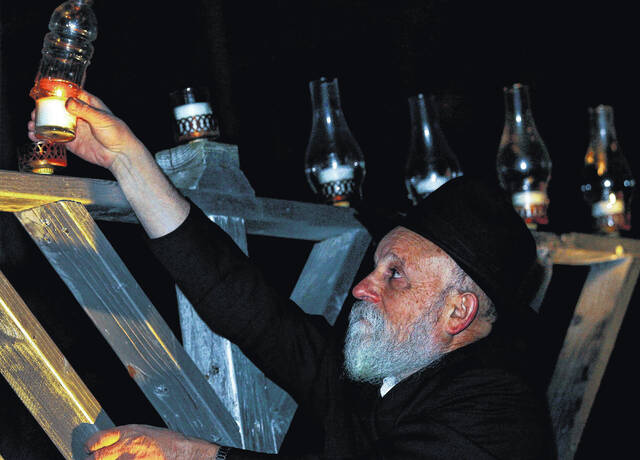

Hanukkah is also known as Chanukah or the Festival of Lights and is celebrated annually in the Jewish community. Beginning at sundown on the 25th of Kislev on the Hebrew calendar, which usually occurs in November or December, the eight-day holiday is celebrated in remembrance of the Jewish warriors, known as the Maccabees, who overthrew their Greek Syrian oppressors in the second century.
This year, Hanukkah started at sundown on December 14.
Why a Menorah?
Following the Maccabean Revolt, the victorious Jews were able to reclaim their temple. Inside, they found a single container of oil, enough to keep the candelabrum [menorah or Hanukiah] lit for one day. But instead, the oil kept the menorah lit for eight nights, in what became known as the “Hanukkah miracle.”
The main tradition of the Jewish holiday dating back to roughly more than 1,800 years, has been the nightly lighting of the menorah. Early sources contend that only one candle initially lit the menorah, marking the rededication of the Temple.
Why eight candles?
Changing over time, as traditions often do, one candle became eight. A candle for every night of Hanukkah, lit in remembrance of the lamp oil that miraculously burned for eight days.
Following this change, menorahs now have nine branches to hold eight candles, along with one to hold the shammash that is used to light the other eight.
Hanukkah observers traditionally display their hanukkiah or menorah in the window of their homes, proudly showing the world the miracle their God performed for them.
Some Christians may be surprised to learn Jesus also celebrated Hanukkah, though it was called “the Feast of Dedication” during His time.
All about the food
Many holiday dishes enjoyed during the Hanukkah season are traditionally oil or dairy- based. Frying foods in oil further reinforces the memory of the Hanukkah miracle.
Some beloved dishes typically served during the holiday are potato latkes, sufganiyot (Isreli jelly-filled donuts) or challah, which is Jewish bread made to represent manna.
Another Hanukkah tradition is the giving of “gelt” which is the Yiddish word for “money.”
Rooted in the 16th century, this tradition refers to the Italian and Sefardic tradition of collecting money to buy or make clothing for economically challenged students in local schools.
In a likely nod to this earlier tradition, 19th century Jews living in Eastern Europe started giving coins to their children as Hanukkah gifts. Immigrants to America brought the tradition with them.
Capitalizing on the custom, American confectioners started producing chocolate wrapped in gold foil with symbols dating back to the Maccabees pressed into them as early as the 1920’s.
Today, the chocolate coins are often used by children playing dreidel.
Holiday entertainment
After the menorah, the child’s toy dreidel is one of the most easily recognized symbols of Hanukkah.
There is still debate over when the popular toys first became a mainstay of the holiday. Lore says they were always connected to Hanukkah. Jewish scholars say they did not make an appearance in Jewish documentation until around the 18th century.
Not getting the same ad nauseam radio airplay as tunes devoted to Christmas do, there are actually several songs celebrating the Jewish holiday. A song of praise, the poem titled “Maoz Tzur,” is the most famous. Other popular holiday songs are “Hanukkah, Oh Hanukkah,” and “I Have a Little Dreidel.”
Beside the “Maoz Tzur,” another famous holiday song is “Light One Candle,” which was recorded by Peter, Paul, and Mary in 1982.
Telling of the Maccabees’ fight for freedom and praising 20th century freedom fighters, the song appeared on Peter, Paul, and Mary’s 1986 No Easy Walk to Freedom album.
Famous Jews
There are famous Jewish folks in every aspect of society, from scientific to entertainment. Some more famous Jews are Albert Einstein, Steven Spielberg, Adam Sandler, Bob Dylan, Natalie Portman, Judge Ruth Bader Ginsburg, Seth Rogan, John Stewart, and Scarlet Johansen. Additionally, is Golda Meir who was Israel’s first female prime minister. She also played a significant political role in the country’s founding.