
On the wedding day of future President John F. Kennedy and Jaqueline Bouvier, September 12, 1953, America’s Camelot began.
Married in front of over 1,200 guests, lightbulbs flashed as cameras snapped pictures of the dazzling couple. In the days that followed, the future first lady’s wedding dress graced the front pages of all the national newspapers and made every magazine cover. Americans poured over articles opining on the bride’s stunning wedding gown — yet none of the dress’s admirers gave much thought to the agile fingers that expertly stitched each breathtaking thread.
Certainly, none of the article’s authors did.
From our ancestors we inherit many unique traits — hair, eye, and skin color — but what of special talents?
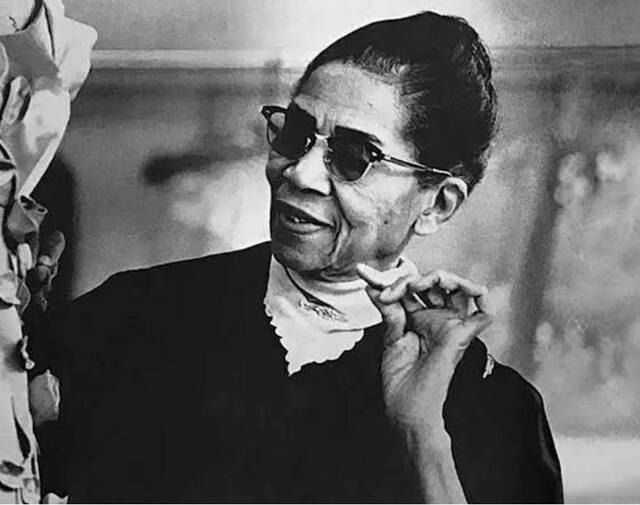
Ann Cole Lowe came from a line of women who mastered needle and thread, weaving and twisting life into cloth.
Born December 14, 1898, in Clayton, Alabama, Lowe never dreamed she would one day design a wedding gown for American royalty.
The beginning of a dream
Lowe’s great-grandmother had been enslaved, but the little girl grew up hearing how one special skill earned her grandmother her freedom — her ability to sew.
Passed down from mother to daughter, Lowe’s grandmother made herself invaluable to the wife of her owner by designing and handcrafting all her mistress’ unique dresses. After earning her freedom, her grandmother began a seamstress business.
Life rarely stays stable for long and at the age of 16, Lowe lost her mother in 1914.
Devastated, and finding herself with a line of waiting customers, the teen refused to throw in the towel.
Instead, she sat down with needle and thread and gave it all she had.
And Lowe really did have to give it all she had because at the time of her mother’s passing, she was in the middle of filling an order of four ball gowns for Elizabeth Kirkman O’Neal, the First Lady of Alabama.
As Lowe’ s nimble fingers flew across the cloth, every stitch fell into line with perfection and before she knew it, all her orders were filled — even Mrs. Elizabeth Kirkman O’Neal’s.
Leaning into her obvious talent, Lowe enrolled at a New York design school in 1918. One of the school’s only black students, she completed her courses in segregation from her white her classmates. Persevering, Lowe earned her degree and graduated.
Just a few years short years later, Lowe was designing and crafting dresses for some of America’s most affluent names like the Rockefellers and the Roosevelts.
When Olivia de Havilland accepted her Oscar in 1947, she did so wearing an Ann Lowe creation.
Overnight, Havilland’s exquisite blue dress with Lowe’s signature floral embroidery cascading down its center was the talk of Hollywood and beyond.
Despite Lowe’s success, her clients still refused to credit her designs.
Demanding R-E-S-P-E-C-T
In 1953, Jane Auchincloss’ daughter Jacqueline Bouvier was engaged to be married to the nation’s future president, John F. Kennedy, and a one-of-a-kind wedding dress needed to be found. Given Lowe’s name, Auchincloss wasted no time in commissioning the unknown genius to design her daughter’s dress.
Eight weeks of work and hours of fittings were poured into Bouvier’s wedding dress.
At its end, a fifty-yard, silk taffeta work of art, complete with a skirt embellishment of delicate wax flowers weaved into its folds, lay waiting for its bride, when Lowe’s studio flooded — destroying the bride’s gown and all nine of her bridesmaids’ dresses.
A black woman living in early 1900s America, she was used to hard knocks.
Taking the flood damage in stride, Lowe replaced all the material at her own cost, and she and her team got to work.
Instead of making a profit, Lowe ended up taking a $2,200 hit.
Up against a ten-day deadline, Lowe’s team did not complain or make excuses. They simply sewed, and sewed, and sewed some more until all ten dresses were completed flawlessly.
Because of the flood, all of the wedding party’s designs were destroyed, so every fold, tuck, and lovingly sewn seam was stitched completely from memory.
When Lowe arrived at the Auchincloss home to deliver the wedding gowns, a staff member stopped her at the door, telling her she needed to go around back and use the servant entrance.
For Lowe, it was a life-changing moment.
She did not complain when, for her to get an education, she had to do so segregated from her white classmates. She did not speak out when stars wore her gowns but never spoke her name. But standing there on what should have been one of the proudest days of her life, holding the most momentous creations of her career, Ann Cole Lowe decided to speak up because she was not using the servant entrance.
If her talent was good enough to be worn by the bride, then it was certainly good enough to walk through the front door.
With months of setbacks and frustrations evident on her face, Lowe fixed the impertinent staff member with a steely glare as she reportedly said, “If I can’t come in the front door, I’ll take these dresses back to New York.”
A minor standoff ensued.
Hours away from the wedding of the century, the staff member sized up Lowe and wisely decided to believe her. Having won both the battle and the war, Lowe, her arms laden with some of the most iconic pieces of American history, waltzed right through the Auchincloss front door — like a guest.
The wedding went off without a hitch and media outlets around the globe lauded the happy couple, particularly Bouvier’s elegant bridal gown.
Following the wedding, praise for the future First Lady’s sophisticated romantic dress was on everyone’s lips, however, none of the magazines, newspapers, or TV news shows mentioned the name Ann Cole Lowe in their coverage of the nuptials.
Rubbing salt in the years old wound, Jacqueline was later quoted in an article, now as First Lady, saying her wedding dress was designed by “a colored woman dressmaker, not the haute couture.”
Feeling the slap of belittlement from miles away, Lowe wrote to Jacqueline’s press secretary demanding her preference for being referenced as a “noted negro designer.” Acknowledging the insult, the White House apologized, though the magazine responsible for the article never printed a retraction.
Refusing to let any side noise slow her down, Lowe opened a salon on Madison Avenue next — becoming the first black woman to do so in the prominent locality — but as usual, she found her skin color a barrier to success.
Many clients bullied Lowe into devaluing her work, leaving her ending each month often in the red.
The hits just kept on coming for Lowe and in 1958, her son Arthur Lee died in a car crash, in 1962, she lost an eye to glaucoma, and in 1963, Lowe was forced to declare bankruptcy. When the IRS came after her, Lowe lost her salon.
Recognition at last
While in the depths of despair, Lowe found a lifeline in the form of a mysterious benefactor who swooped in at her darkest hour and paid off her taxes. History and gossip credits Mrs. Kennedy with this good deed, but the true author’s name has been buried by the sands of time.
Not one to accept a free ride or rest on her laurels long, Lowe continued to pound pavement, and by the 1960s her work was earning her tributes and praise in magazines as “society’s best-kept secret” and “The Dean of American Designers.”
Now in her early seventies with her eyesight failing her, Lowe laid down her needle and thread.
Retired, broke and blind, Lowe moved in with her daughter Ruth in Queens, New York.
Five years later, on February 25,1981, Lowe succumbed to complications from an extended illness and passed away at the home of her daughter at the age of 82.
Identification breeds change and in 2022, Lowe’s work was featured by the Metropolitan Museum of Art. The Winterthur Museum also honored Lowe, opening an “Ann Lowe: American Couturier” exhibit in 2023.
Lowe lived her life with her talent hidden in anonymity, not because she did not want to be recognized, but because society withheld it from her.
The world’s “popular people” looked through her. To them, a black woman’s name wasn’t worth remembering, never mind mentioning in public.
The First Lady’s description of the designer of her wedding dress succinctly sums up society’s mindset at the time; “A colored woman dressmaker, not the haute couture.”
It was an eight word inditement of Lowe’s talent, chance for recognition, respect, and dignity. Eight words capriciously uttered briefly erased Ann Cole Lowe’s name from the Kennedy wedding day narrative.
Eight words erased her ancestral legacy and contribution to the nation.
Today, Jackie Kennedy’s wedding dress is too fragile for public viewing. It is, however, preserved at the John F. Kennedy Presidential Library and Museum in Boston.
Yes, it does include a placard crediting Ms. Lowe as its designer.
Those in power sought to erase her name, and now few today know the most iconic dress in American history was lovingly and painstakingly sewn by a black woman named Ann Cole Lowe who had a magic inside her society’s prejudices could never hold back or tamp down — Ann Cole Lowe enters through the front door, thank you!
Leave a Reply
You must be logged in to post a comment.