
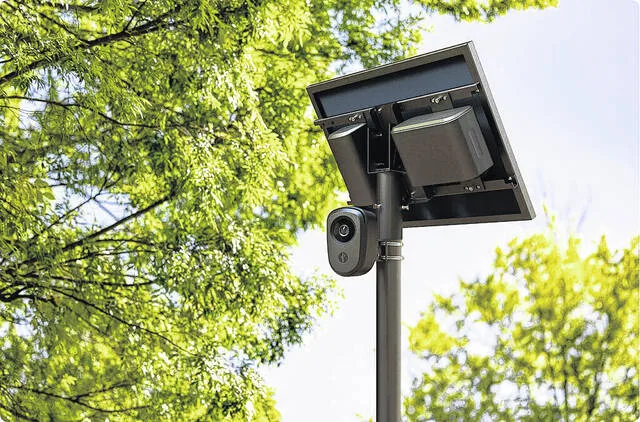
MARLBORO COUNTY— Sheriff Larry McNeil says he inadvertently waded into the Flock camera controversy pond when the Marlboro County Sheriff’s Office submitted a $1.2 million request from the state that included more than $300,000 for 30 Flock cameras. He adds that he feels the camera system is a very useful law enforcement tool but not one he believes outweighs residents’ sense of comfort and safety.
“I am prepared to hold off on the purchase of Flock cameras at this time. When the grant was applied for, there was no nation-wide controversy surrounding Flock cameras. At the time, I understood it to be a useful law enforcement tool, one that I have seen produce successful results in other agencies who utilize Flock cameras. But I can assure you the sheriff’s office does not want residents to feel concerns about their safety when they drive around the county,” McNeil explained.
The grant McNeil applied for came partly from a larger $350 million list of legislator-sponsored spending described as “community investments” in the budget. State legislators also approved $365,000 for four counties seeking automated license plate readers; Marlboro County was named as a beneficiary alongside Cameron, Florence, and McCormick counties. The funding comes as South Carolina lawmakers are considering expanding its use of technology: Senate bill S. 447 would add a license plate reader provision to state law, while House bill H. 4013 would set standards for law enforcement’s use of automated plate readers and the handling of data they collect.
Separate from that, MCSO also made an additional $1.2 million request that included more than $300,000 for 30 Flock cameras, assets McNeil says are needed to assist his office with procuring the advanced technology tools required to continue keeping residents safe in today’s modern age.
“My focus is always on keeping Marlboro County safe. I believe Flock cameras can be a beneficial tool for accomplishing that. But I want to hold off on proceeding further with Flock cameras until we have an opportunity to learn more about their constitutional legality. If we lose the funding, I’d hate that but so be it. My job is not only to keep residents safe, but also to ensure they feel safe,” McNeil said.
McNeil, and other county first responders, have not been shy expressing their frustration with low pay leading to staffing shortages. Previously, McNeil shared his belief that Flock cameras could aid MCSO with filling this gap.
In this decision, MCSO finds itself mired in the same national debate as many other law enforcement agencies— are Flock cameras safe? Are they even legal?
National headlines increasing reflect a growing wave of public push back against not just Flock cameras, but also “Smart Streetlights” or Covert Pole Cameras, which are cameras hidden inside citywide streetlamp infrastructure, and data centers. Similar to Flock cameras, Smart Streetlights are also equipped with microphone capabilities and license plate readers that track drivers’ movements.